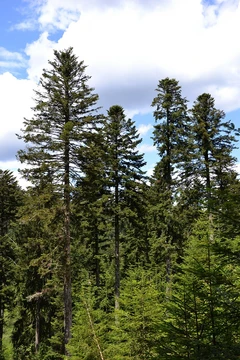
Taxus baccata
An evergreen tree known for its toxic properties and historic wood.

Taxus baccata is an Old World species of evergreen tree in the family Taxaceae, originally known as yew. It is a woodland tree native to much of Eurasia and Northwest Africa, valued historically for its wood and its association with death, immortality, and rebirth.
- Scientific name
- Taxus baccata
- Family
- Taxaceae
- Native range
- Much of Eurasia and Northwest Africa
- Maximum height
- 10–20 m (exceptionally 28 m)
- Maximum trunk diameter
- Up to 2 m (exceptionally 4 m)
- Toxicity
- All parts except the aril are poisonous
- Conservation status
- Endangered in parts of its range
Lore & Background
The generic name Taxus may derive from the Greek toxon, meaning bow. The word yew comes from Old English īw, ēow, ultimately from Proto-Indo-European *h₁eyHw-. The species name baccata is Latin for 'bearing berries'. The tree grows up to 10–20 metres tall, with flat, dark green leaves arranged spirally but twisted into two flat rows. Its seed cones are modified into a single seed surrounded by a fleshy, bright red aril that is sweet and gelatinous. Male cones shed pollen in early spring, and the species is mostly dioecious, though occasional individuals can change sex. Yew is native to all European countries except Iceland, the Caucasus, Turkey to northern Iran, North Africa, and parts of Southwest and South Asia. It prefers steep, rocky calcareous slopes and is extremely shade-tolerant. Birds eat the arils and disperse the seeds, while the plant's toxins protect it from many insects.
Reader's Guide
Taxus baccata holds significant historical and ecological importance. Its wood was prized in the Middle Ages for making longbows and musical instruments such as lutes, leading to near extinction in much of Europe. The tree is also commonly planted in churchyards, where it can reach great age, and is associated with death, immortality, and rebirth. All parts except the aril are highly toxic, containing taxine alkaloids that can be absorbed through ingestion, inhalation, or skin contact. The species is endangered in parts of its range due to land use, felling, and pharmaceutical harvesting for taxanes. Conservation efforts include the Yew Conservation Hedge Project in the United Kingdom and programmes in Catalonia and northern Iberia. Its allergenic pollen rates 10 on the OPALS scale, while female trees trap pollen and rate 1. The tree remains valued for hedging and topiary, and its clippings provide precursors for the chemotherapy drug taxol.
Did You Know?
- All parts of the yew except the fleshy aril are poisonous, with toxins absorbable through inhalation, ingestion, and skin transpiration.
- The wood was historically used for longbows and musical instruments such as lutes.
- Yews are often planted in churchyards, where they sometimes reach great age, and are associated with death, immortality, and rebirth.
- The species is mostly dioecious, but occasional individuals can change sex with time.
Frequently Asked Questions
Who is Taxus baccata?
Taxus baccata is an Old World evergreen conifer in the family Taxaceae, most commonly known simply as the yew. It is a slow-growing woodland tree that typically stands 10 to 20 meters tall, though exceptional specimens can reach 28 meters with trunk diameters up to 4 meters.
What are Taxus baccata's powers or special abilities?
Virtually every part of the tree is toxic to humans and animals, the sole exception being the fleshy aril that wraps the seed. Its dense, fine-grained wood has long been prized for archery, carving, and fine furniture-making.
Where does Taxus baccata call home?
The yew is native across much of Eurasia and into Northwest Africa, favoring sheltered woodland sites. It tolerates deep shade and a wide range of soils, which allows it to persist as an understory tree beneath larger canopies.
How does Taxus baccata's story end?
As an evergreen, the yew never drops all its foliage at once; it sheds older needles gradually while new growth replaces them, giving the tree a perpetually green appearance. In cultural tradition, the yew is tied to themes of death, immortality, and rebirth, and has long been planted in churchyards as a living emblem of that cycle.
Why is Taxus baccata important?
Historically, its tough, springy wood was the material of choice for European longbows and fine woodworking, and the species remains ecologically significant in its native woodlands. Beyond utility, the yew carries deep mythological weight as a symbol of mortality, renewal, and endurance.
More in Conifers 1-23
Spotted an error? Know more?
This is a living reference — every entry is fact-audited, and reader corrections feed straight into our audit queue. Suggest an edit · See this site's audit record